The Safest Pacifiers That Will Give Your Baby Ultimate Comfort

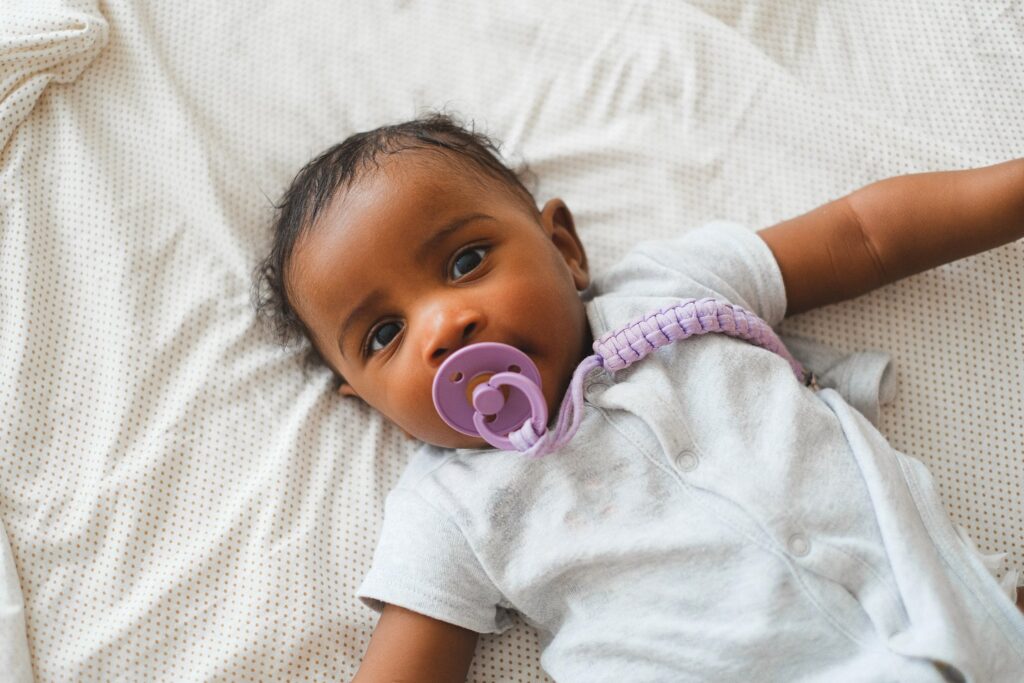
Pacifiers are probably one of the things most often in a baby’s mouth so why not get non toxic pacifiers? I’ve done all the research to find the best non toxic pacifiers for your baby and I’m here to share it all in this post.
Some links may be affiliate links.
Do’s and Don’ts of Pacifiers
Do’s of Pacifiers:
- Choose The Right Size Pacifier: There are usually two to three types of pacifier sizes. You’ll usually find pacifier sizes including 0-3 months, pacifiers 3-6 months, and 6-12 months.
- Proper Hygiene: Make sure to regularly clean your pacifiers to prevent bacteria buildup. You can even boil it to sterilize it.
- Introduce Gradually: To avoid nipple confusion, introduce pacifiers to your baby gradually.
- Monitor Use: Monitor pacifier usage to prevent it from being a choking hazard.
- Weaning: Try to start weaning your baby off of the pacifier at around 6 months old. Using the pacifier for too long can affect oral development.

Don’ts of Pacifiers:
- Don’t Introduce Too Early: Introducing pacifiers too early can interfere with breastfeeding. Make sure breastfeeding is well-established before using a pacifier.
- Don’t Force It: If your baby doesn’t want the pacifier, don’t force it.
- Avoid Adding Sweeteners: Don’t dip the baby’s pacifier in sweets because this can lead to dental problems.
- Don’t Attach to a String: Don’t attach your pacifier to a string because it can cause a strangulation risk.
- Don’t Heavily Rely On It: Pacifiers are very useful for soothing and comfort but don’t overly rely on them. Common concerns about pacifiers are they can cause teeth misalignment if used for a long time.
Toxic Materials In Pacifiers
- BPA: Bisphenol A is a chemical found in many types of plastic. It can cause health risks such as increased blood pressure and cardiovascular disease.
- Phthalates: Phthalates are chemicals used to soften plastics. These chemicals are detrimental to children’s health because they can cause hormone disruptions.
- PVC: Polyvinyl chloride is a type of plastic that may contain phthalates or lead.
- Heavy Metals: Heavy metals can be found in low-quality pacifiers. They’re bad for children’s health because they can cause developmental delays.
- Dyes: Some pacifiers have dyes that can oftentimes contain toxic substances. Look for pacifiers with no artificial dyes.
Best Materials For Pacifiers
- Natural Rubber: Natural rubber pacifiers are a very safe material. It’s made from natural rubber latex derived from rubber trees. The texture is soft and flexible. However, some babies can have a latex allergy. If they’re allergic, using silicone is a better alternative.
- Medical Grade Silicone: Medical-grade silicone pacifiers are one of the safest materials for pacifiers because it’s hypoallergenic, BPA-free, phthalate-free, and don’t have harmful chemicals.
Best Non Toxic Pacifiers
1. Natursutten Natural Rubber Pacifiers

My top choice is Natursutten Pacifiers. They’re natural rubber pacifiers made in Italy and made without BPA, phthalates, or chemical softening agents.
Because natural rubber is naturally soft, it’s gentle on sensitive gums. The design also has a round shield that rests on your baby’s nose which closely mimics the feeling of breastfeeding. This reduces nipple confusion.
This Natursutten pacifier comes in 3 different sizes – 0-6 months, 6-12 months, and 12 months and older.
This non-toxic rubber pacifier also comes with a 100% organic cotton pouch to place your pacifier in.
2. Hevea Non Toxic Rubber Pacifier

Another one I love and recommend is Hevea Pacifiers. They’re an affordable soother option made with 100% natural rubber and are free from BPA, PVC, and phthalates. There are also no artificial dyes – all mineral-based color pigments are natural.
It’s designed with a cherry-shaped round teat that resembles a bottle nipple. And since it’s a one-piece design, it’s hygienic and easy to clean.
Hevea natural rubber pacifiers come in 2 sizes – newborn to 3 months and 3 months to 36 months.
This company prioritizes sustainability in all aspects – the pacifier comes packaged in an FSC-certified box which is recyclable and biodegradable.
3. Sweetie Rubber Non Toxic Pacifier

Sweetie Rubber Pacifiers are made in Malaysia and are created with 100% natural rubber. The solid piece rubber is softer than silicone and also very lightweight.
There’s no BPA, phthalates, chemical softeners, or artificial coloring in these baby products.
Before using, be sure to sterilize it for 5 minutes to ensure it’s completely clean.
4. Itzy Ritzy Natural Rubber Pacifiers

Itzy Ritzy pacifiers are some of the most popular rubber pacifiers. It has a unique cable design detail on the handle. And if you like pastel colors, they have a ton of pastel color options to choose from.
The rounded nipple is cherry-shaped which closely mimics the feel of breastfeeding.
This 2-pack of non toxic pacifiers also meets ASTM safety standards. They’re also BPA free.
They also have silicon non-toxic pacifiers if you prefer that material more.
5. Ecopiggy Ecopacifier Natural Pacifier

Ecopiggy’s pacifiers are made with 100% pure rubber from the Hevea tree.
Ecopiggy natural pacifiers are a great choice for an eco-friendly pacifier because there are no artificial colorants, chemical softeners, BPA, PVC, phthalates, and parabens.
These Ecopiggy pacifiers come in two sizes – one for newborns to 6 months and also natural pacifiers for 6+. They also have a pack of 3 pacifiers for some extra savings.
But unlike some other brands, this pacifier only comes in one color.
6. Nuk Newborn Non-Toxic Pacifier

Nuk Newborn Pacifiers are made with medical-grade silicone with a heart-shaped shield that fits under your baby’s nose.
This is a 2 pack pacifier with an orthodontic nipple shape which helps prevent teeth misalignment. These orthodontic pacifiers come in 2 colors – blue and pink.
These eco-friendly soothers are BPA-free and safe to use.
7. Tommee Tippee Silicone Pacifier
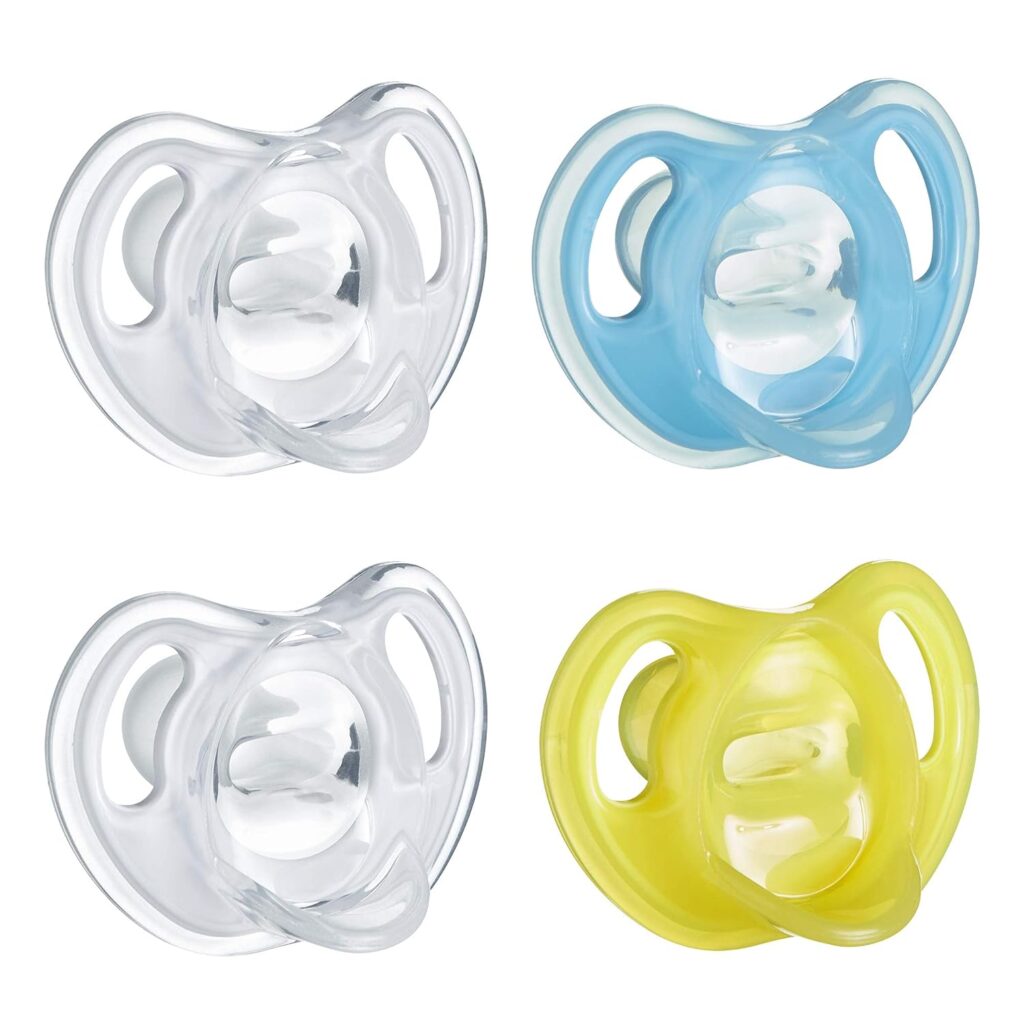
Tommee Tippee pacifiers are a great option for non-toxic silicone pacifiers. It’s made with an ultra-lightweight silicone material that’s BPA-free and silky soft.
The design has a curved shield which makes it comfortable to fit on your baby’s nose. And with the large ventilation holes, this can allow for extra airflow.
It’s also dishwasher-safe and easy to clean. They have pacifier sizes for 0-6 months, 6018 months, and 18-36 months.
8. Philips AVENT Soothie Pacifier
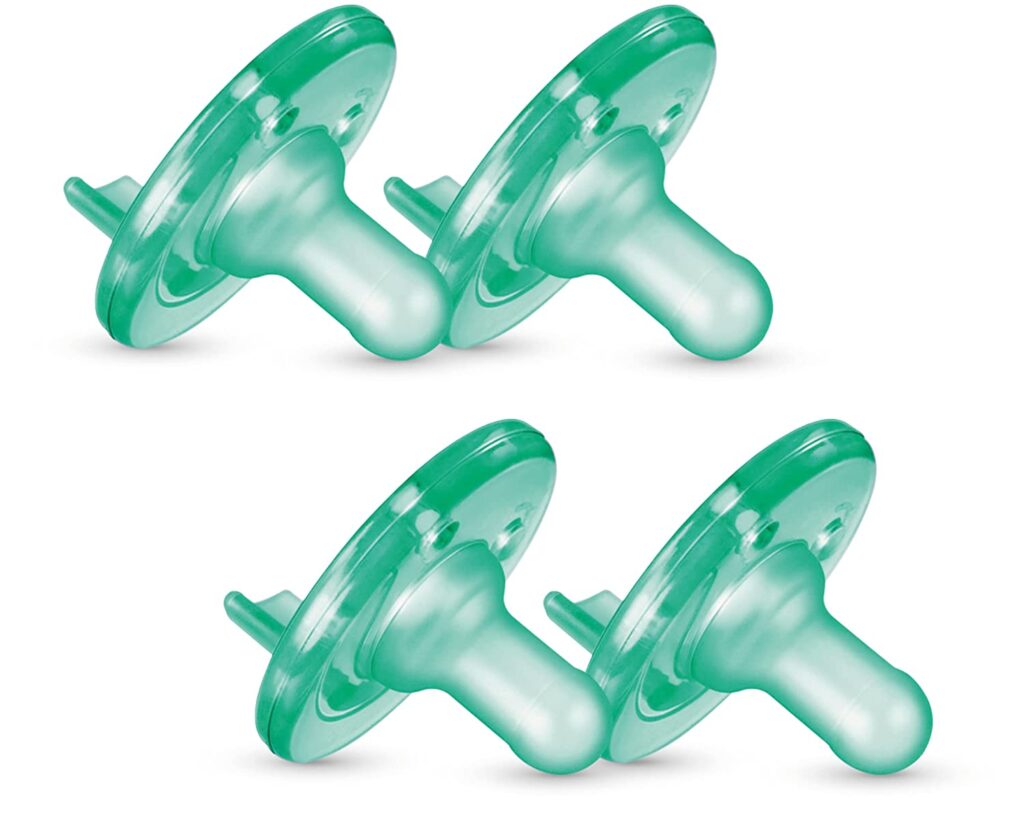
Philips AVENT silicone pacifiers are an affordable option and are made BPA-free and latex-free. It’s one of the most popular nontoxic silicone pacifiers and is widely used in hospitals.
If you want a food-grade pacifier that’s similar to what your baby used in the hospital, this one is the best choice.
This comes in two sizes – one for 0-3 months and another for 3-18 months.
9. Ryan & Rose Non Toxic Pacifiers
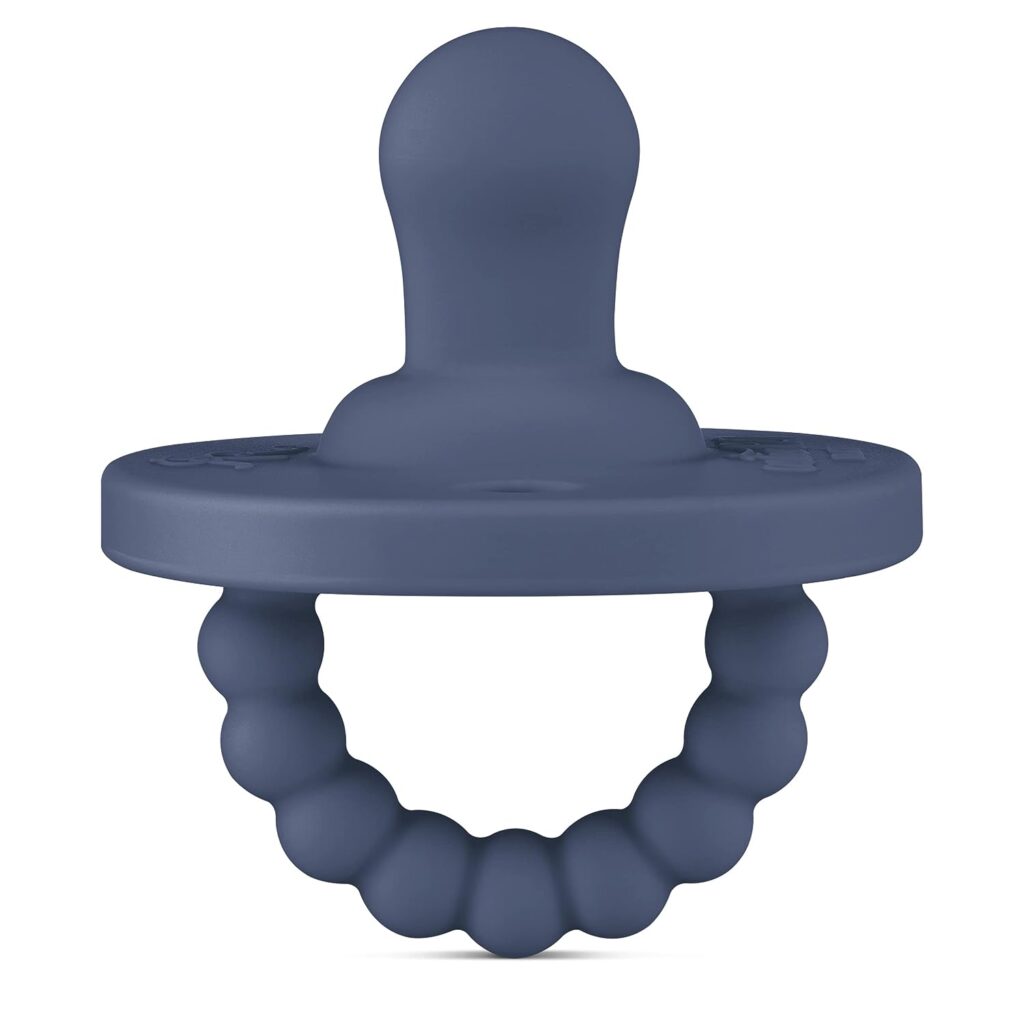
Ryan & Rose Flat Pacifiers are a safe non-toxic pacifier for your baby because it’s made with 100% medical-grade BPA-free silicone, free of latex, and is phthalates-free.
It’s a 2-in-1 non toxic teether and pacifier combo. And it can also attach to pacifier clips easily.
The pacifier is also top rack dishwasher-safe.
Frequently Asked Questions on The Safest Pacifiers
Are natural rubber pacifiers safe?
Natural rubber pacifiers are safe and one of the safest materials for pacifiers. They’re safe for your baby to chew. It’s even biodegradable so it has a positive environmental impact.
Are plastic pacifiers safe?
BPA-free plastic pacifiers are better than plastic bottles with BPA. However, it’s still best to avoid them. When the plastic is heated, there still may be other chemicals that will leach into the contents. Better plastic pacifier alternatives are natural rubber and silicone pacifiers.
It’s a good idea to use non-plastic alternatives.
Can pacifiers be too big?
Pacifiers that are too big can be a choking hazard and can be difficult for your baby to suck on. It’s important to find the right size pacifier for your baby. Be sure to follow the recommended age range as a starting point to decide which size pacifier to get.
Do pacifiers prevent breastfeeding?
Pacifiers can potentially cause nipple confusion if it’s introduced too early. The American Academy of Pediatrics (AAP) recommends to start using a pacifier when breastfeeding is well-established.
Do pacifiers need to be replaced?
Pacifiers need to be replaced every 4-6 weeks in order to maintain hygiene.
After each use, wash your pacifier with warm soapy water to get rid of germs. It’s recommended to sterilize with boiling water before initial use.
What are alternatives to pacifiers?
Prolonged use of pacifiers can cause a child’s teeth to become misaligned and they can also disrupt breast-feeding. Using pacifier alternatives can help comfort your baby while protecting your baby’s teeth.
Pacifier alternatives include teething toys, breastfeeding, stuffed animals, or just rocking movements. These alternatives may not be as effective as using a pacifier for soothing but try out different ways to see what your baby enjoys the most.
That’s all for this post on the best non-toxic pacifiers!
RELATED POSTS:
- Cribs: Best Non Toxic Baby Cribs and Mini Cribs
- Crib Paint: Best Non-Toxic Crib Paints
- Baby Bottles: Best Non Toxic Baby Bottles
- Sippy Cups: Best Non Toxic Sippy Cups and Sippy Cup Alternatives
- High Chairs: Best Non Toxic High Chairs
- Strollers: Best Nontoxic Strollers
- Bassinets: Best Bassinets For Babies